
If you have been charged with a DUI, contact our team of Chicago DUI lawyers immediately. A criminal conviction can have long-term repercussions, such as affecting employment opportunities and other life considerations. Getting the legal counsel of a knowledgeable Chicago criminal defense attorney can help you fight the charge or reduce your sentence. Mitchell S. Sexner & Associates LLC is here to defend you and walk you through the court process after receiving a DUI charge.
Our Results Speak for Themselves
In the last 30+ years, we have helped a lot of people handle their legal issues. At Mitchell S. Sexner & Associates LLC we are thrilled to have successfully represented over 20,000 clients and look forward to being able to yield positive outcomes for many more.
At Mitchell S. Sexner & Associates LLC, our seasoned attorneys have practical experience in the criminal law field and routinely monitor changes in the legal landscape. We keep our skills sharp, and it shows in the results that we achieve for our clients.
Experience in a Variety of Areas
Every situation is unique. When you are facing potentially serious consequences for being accused of committing a criminal offense, you need an attorney who has the skills and resources to fight back aggressively on your behalf.
From accusations of domestic violence, theft, aggravated assault, and even murder to handling drug crimes, DUI's, and marijuana cases, the attorneys at Mitchell S. Sexner & Associates LLC know how to build a defense strategy tailored to your unique case. We know that your reputation and even your job may be on the line, depending on your circumstances. That's why we work hard to protect your rights and create a strategy that offers you the best possible chance at a positive outcome for your situation.
Awards For Us, Results For You
Mitchell S. Sexner has been named a “Top 100” trial attorney by the National Trial Lawyers, was selected as one of the top 100 attorneys in Illinois by RUE Ratings, and was selected as a “Top One Percent” attorney by the National Association of Distinguished Counsel.
Mr. Sexner also has an Avvo rating of 10 and is a highly recognized figure in the legal community for his experience and professional code of conduct.

- What Are the Penalties for DUI in Illinois?
- What Constitutes Drunk Driving in Chicago, Illinois?
- What Does it Mean to be “Over the Limit”
- What Does DUI Probable Cause Mean?
- Sobriety Checkpoints
- Actual Physical Control & DUI in Chicago
- How Can the Police Tell If I'm Intoxicated?
- Penalties for First-Time DUI vs. Multiple DUI Offenders
- DUI Sentence Calculator
- DUI Supervision vs. DUI Probation – What’s the Difference?
- Statutory Summary Suspension
- Why are Judges Hesitant to Allow Defendants to Represent Themselves for a DUI?
- Will I Need to Hire a Lawyer for a Chicago DUI?
- Contact Our DUI Defense Attorneys in Chicago
What Are the Penalties for DUI in Illinois?
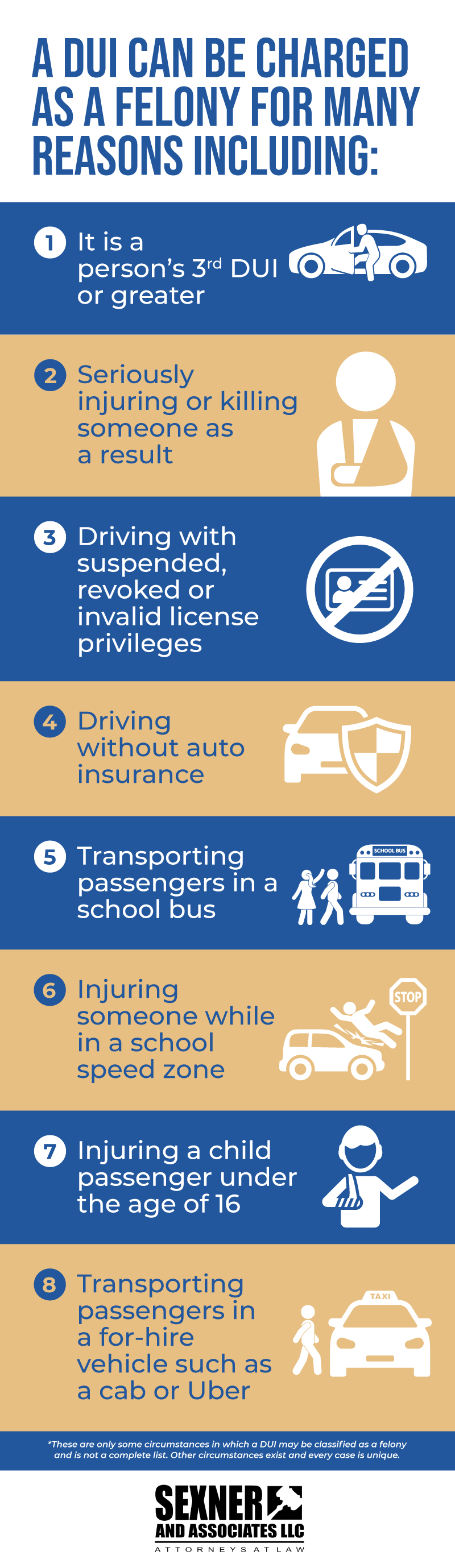
Driving under the Influence (DUI), or drunk driving, is generally a Class A misdemeanor in Illinois, punishable by up to 365 days in jail and up to $2500 in fines. Although it's typically associated with heavy fines, driver's license suspensions, and possible jail time, few first time DUI cases ever result in such penalties. Most DUIs in Chicago and throughout Illinois will still allow a first-time offender to retain his or her driver's license and continue to drive so that they can earn a living or go to school. Under certain circumstances however, the crime may be elevated to a felony with the mandatory loss of your driver's license (revocation) and even more significantly, possible penitentiary time.
With some exceptions, a driver's first two DUIs are usually classified as misdemeanor offenses in Illinois. But if the driver gets a third DUI, if someone is seriously injured as result of their drunk driving, if the driver has no valid privileges, if he or she has no automobile insurance, or under certain other circumstances, the charge may become a felony.
What Constitutes Drunk Driving in Chicago, Illinois?
The laws that govern Driving Under the Influence of Alcohol and other Drugs are found in Section 11-501 of the Illinois Compiled Statutes and basically state that a person is guilty of this crime if he or she is under the influence of alcohol or other drugs to the degree that it renders them incapable of driving safely. As is the case with most other criminal and traffic laws, this statute does not specifically describe what “being under the influence” or “incapable of safely driving” exactly means. It's left to the sound discretion of the trial judge to make that determination based on the specific facts of the case. As such, the same set of circumstances might be interpreted differently by different judges.
Before the widespread use of dash cameras by the Chicago Police Department (which today are in use in virtually every city in Illinois), it was very common for a defendant to be found “not guilty” at trial merely because the judge had no video to view and had to rely entirely on the testimony of the police officer to prove guilt. If the testimony of the defendant was equally convincing, under the law, the court would need to find that the State failed to prove the defendant guilty beyond a reasonable doubt.
Serving Clients in Chicago and Across Illinois
What Does it Mean to be “Over the Limit”?
By the 1970s, prosecutors and police departments were tired of losing DUI cases and wanted a stronger method of finding suspected drunk drivers guilty in court. Enter the Breathalyzer and similar machines that analyze suspended alcohol particles in the lungs. Using the Breathalyzer machine as a basis, the Illinois legislature passed legislation that is often called the “DUI per se” (which means “in and of itself”) law. This law basically stated that if a person's “blow” showed a BAC (breath Alcohol Content) over a certain percentage, then it would be presumed by the court that this person was under the influence and incapable of driving safely. For a long time in Chicago and throughout Illinois, this number was .10, but it was changed to .08 some time ago, where it remains today (despite suggestions by some that it be lowered even still).
Are You Definitely Impaired if You Blow Over .08?
Is this .08 a magic number by which anyone who blows higher than that reading is definitely too intoxicated to drive? The answer is NO. Everyone's metabolism is different, and other considerations like what was eaten that day, as well as a person's height, weight, and tolerance to alcohol, all play a part in what makes someone an unsafe driver. A linebacker for the Chicago Bears might be barely intoxicated at that level, whereas a much smaller person with little tolerance to alcohol might be completely incapacitated. So, in reality, .08 is just a compromise number. Some people are too drunk to drive at that level, and some are simply not.
What is a Presumption of Intoxication?
Under the American criminal law system, the State always has the burden of proving a defendant guilty of a crime. The defendant doesn't need to prove anything at all, and he or she enters the courtroom completely on equal footing with the State. However, things are a little different when it comes to something like the breath test. For a number of technical legal reasons, including that driving is considered a “privilege rather than a “right,” if you blow over 08, it's just assumed that you're too drunk to drive, and you'll have to prove otherwise at trial. That is often difficult to do, which is why many people choose to refuse the breath test in order to have a better chance to win the trial.
Many people call .08 the “legal limit” and believe that if you blow over that number, you'll be found guilty, and if you blow below, you'll be found not guilty. This is not correct. Depending upon the circumstances and the skills of the DUI lawyers involved, many people have been found not guilty when they have blown in excess of .08. But it is also true that people who blew well below that number have been found guilty as well. Every traffic case is different and should be carefully evaluated by your legal counsel.
The presumption that a defendant is unfit to drive with a result of over .08 applies to all drivers regardless of age. But for drivers under the legal drinking age of 21, the Illinois Zero Tolerance Law also allows such a person to be given a Zero Tolerance violation if they are found to have any trace of alcohol in their blood, even .01%.
Chicago police officers have recently also been cracking down on driving while under the influence of cannabis as well, with new laws setting a different “Legal Limit” for cannabis of 5 nanograms of delta-9-tetrahydrocannabinol [THC 9] per milliliter of whole blood. Remember, you may not feel intoxicated or too impaired to operate a motor vehicle, but this does not necessarily change the fact that depending on your breath, blood, or urine test results, you may still be presumed to be too impaired to drive.
What Does DUI Probable Cause Mean?
When driving late at night, especially on weekends, holidays and after major sporting events, the Chicago Police and other police departments are usually on the lookout for drunk drivers. That's because during such times, the chances of encountering an impaired driver are significantly increased as people are returning from dinner, parties, events, or other celebrations. Police sometimes refer to this as “shooting fish in a fishbowl,” because it's often so easy to find drivers that they can arrest for driving under the influence.
But police also know that no matter how likely it is that they may encounter DUI drivers, they always must have an articulable suspicion that someone has or is about to commit a crime (a good reason) to pull someone over or to engage a driver. A mere suspicion that someone “doesn't look right” or “is in the wrong neighborhood” is never enough. Such pull-overs and the arrests that may follow are typically considered discriminatory in nature. After all, in the United States, people have the constitutional right (via the Fourth Amendment) to be free from unjustified searches and seizures and pulling someone over without a good reason flies in the face of that constitutional protection.
Some of the most common reasons and situations that are often considered by a Judge to be a legitimate probable cause basis include:
- Improper Lane Usage: This is probably the most common “probable cause” reason used by police. Who among us has gone a whole day without touching the lane divider line or momentarily leaving their lane? Police know these infractions are inevitable, so sometimes if they believe a driver looks suspicious, they may just follow and wait for a violation to occur. When the driver touches the paint or makes an even slightly improper lane move, the police lights come on.
- Other traffic violations: Virtually any traffic violation or infraction will do when it comes to giving the police “probable cause” to pull someone over. It doesn't need to be a serious matter – it just needs to be something. Some examples of such minor infractions include failure to wear a seat belt, license plate light out, brights on, cracked windshield, and hanging air freshener or rosary beads.
- Accident Involved: If the police are reporting to the scene of an automobile accident, that's generally all the probable cause that they'll need. It's part of their job to investigate these matters and this will always give them a perfect opportunity to evaluate the drivers up close for possible intoxication.
- Driver in Distress: One of the basic functions of the police is called “community caretaking”, which means helping people. So, when the police receive a call that a person doesn't seem to be awake while sitting in their car, they are allowed to investigate in order to determine whether that person is sick, dead or just sleeping. Another example of this might be a person who has pulled over on the side of the highway. Even if the officer later finds out that the person needed no help at all, most judges will likely hold that the officer was justified in conducting a well-being check.
- 911 Call: If someone calls into 911 that a person is driving erratically, the police are allowed to investigate, although because callers sometimes have ulterior motives (estranged husbands, wives, etc), the police need to also make sure that the call has “sufficient indicia of reliability” or that the police have witnessed the traffic infraction themselves.
As long as the police have probable cause to speak with the driver, they are in a position to evaluate them for a potential DUI and observe their demeanor, smell their breath, observe their eyes, observe their balance, and ask some basic informational questions. Many a DUI arrest has grown out of situations such as these. An experienced Chicago DUI lawyer will always investigate whether a Motion to Dismiss can be filed based upon a lack of Probable Cause, because if such a motion is successful, it will generally result in the case being thrown out of court.
Sobriety Checkpoints
Another major source of Chicago DUI arrests are sobriety checkpoints and roadblocks. Most DUI arrests are a result of the police pulling over a driver, whereas in the case of roadblocks and such, the drivers actually come to the police. These events involve the police setting up a location, usually with cones, flares or barricades with the intended purpose of checking drivers to make sure that they're in compliance with some traffic law.
Police Must Follow Certain Rules for DUI Checkpoints
Police are not allowed to just set up a checkpoint anywhere and anytime they want though. There are specific laws that relate to how these are to be arranged. Usually, the police need to file a written plan for the roadblock, indicating exactly where and when it will occur. They also need to indicate what the purpose will be and what they will be checking for, as well as specifics about which cars they will check. Depending on the volume of traffic, it may be impracticable to check every car, so often instead, the plan will indicate that every 3rd car, or every red car, or every two-door car will be subject to inquiry. These plans usually must be filed a certain amount of time before the planned roadblock and also published somewhere in a newspaper.
The advertised purpose of a roadblock may be a “safety check” (to visually examine the car for cracked windshields, bald tires, burnt out lights), or a “seat belt check” (to make sure that all occupants are belted), or for any number of reasons. But you can be sure that regardless of whether the expressed purpose is a “sobriety checkpoint” or not, police view these roadblocks as an unequalled opportunity to find and arrest drunk drivers. That's why you'll seldom see such safety checks during daylight hours when there are few DUI drivers on the road.
Remain Calm and Remember You Have Rights
During such a checkpoint, police will typically stick their heads right up to (or inside) your window to survey the inside of the car. Are there cans or bottles of alcohol visible? Is there the odor of alcohol or marijuana? Does the driver appear to be under the influence? Police may also ask questions which can be disorienting for even sober drivers. They may demand your license and registration and ask about what you have been up to that night.
You should always remember that you still have rights though, regardless of whether you're at a sobriety checkpoint or being pulled over while driving. One of the most important rights you have is the right to remain silent, which any lawyer will remind you is vital to remember while at a checkpoint.
Upon request, you will need to provide police officers with your license and registration at a sobriety checkpoint. You do not however, have to answer any questions they ask. This can include questions about where you're going, where you're coming from, or whether you've had anything to drink.
Police Need Probable Cause to Search Your Car
The police do not have the right to search your vehicle at a sobriety checkpoint unless you give them consent or they have a warrant or probable cause. They also do not have the right to make you take any sort of sobriety test, including a Portable Breath Test (PBT) or field sobriety tests without such probable cause (unless there have been very serious “Type A” injuries from an accident).
Police will often set up checkpoints in a location after a curve or in a location that may make it difficult to turn around once you've noticed the roadblock. Most people assume that if they turn around once they've seen the roadblock that the police will have a reason to then chase them and stop them because such actions look guilty. But caselaw in Illinois generally stands for the proposition that as long as you can turn around or take another path without violating any laws (such as no U Turn Allowed), that the mere act of taking another path is not in and of itself considered probable cause to stop your car.
If you are charged with a DUI or other violation, remember that the burden of proof is on the prosecutor and police officer, not you. Contact the team of Chicago DUI lawyers at Mitchell S. Sexner & Associates LLC immediately if you've been arrested at a sobriety checkpoint. We can help. Call (312) 644-0444 now.
Actual Physical Control & DUI in Chicago
Thinking About Sleeping It Off in Your Car?
You went out for a good time, whether it was to a party, a restaurant/bar, sporting event, or whatever. Although you knew you might have "a drink or two" you did not anticipate drinking as much as you did, and you are now intoxicated enough that you would likely be considered too impaired to drive home. You have no other sober person to drive for you, you have no means to obtain alternative transportation at that time, and you think to yourself, "If I sleep it off in my car for a few hours, then I'll be good to drive home."
In Illinois, this decision could likely result in your arrest for Driving Under the Influence of Alcohol, a suspension of your driving privileges, and a finding of guilt in court following a trial. If this is not your first DUI offense, you might then be convicted, sentenced to a jail term, and your driving privileges could be revoked.Why?
Is Driving Required for A DUI?
In Illinois, it is unlawful for a person to be driving OR in actual physical control of an automobile while under the influence of alcohol, drugs, intoxicating compounds, or any combination thereof, under Section 11-501(a) of the Vehicle Code. When most people think of a DUI, they logically assume that since DUI stands for "Driving Under Influence", that you need to actually drive a car to be found guilty. Unfortunately, this is not correct. The phrase "actual physical control" refers to other common situations where the person is not actually operating or driving the car when observed by police, but the circumstances indicate that the person either was in fact driving prior to the police arrival or was found in a position that indicated the person had control over the automobile such that they could put the key in the ignition or otherwise start the car and drive away at any minute.
There have been many instances where motorists were found in their cars under circumstances which caused them to be charged with, and later convicted of DUI, where they were clearly just intending to "sleep it off". Yet their convictions were upheld on appeal because of the doctrine of actual physical control.
What is Actual Physical Control?
So what can constitute actual physical control? One might think that it involves the driver behind the wheel in the driver's seat, the key in the ignition, engine running, alone in the vehicle with the doors locked, and physically able to operate the vehicle. In reality, the Courts have held that while these may be factors to consider among others, they are not required to all be present; rather, a combination of factors, taken on an individual case by case basis determines whether or not a given situation amounts to "actual physical control."
In People v. Davis, the Defendant was found in the backseat, sealed in a sleeping bag, and still ran afoul of Illinois's DUI statute. This vague concept of actual physical control can get people who have no intention of driving in legal trouble. If you are being accused of drunk driving while you weren't even driving your vehicle, an attorney can help you fight the charges.
How Can the Police Tell If I'm Intoxicated?
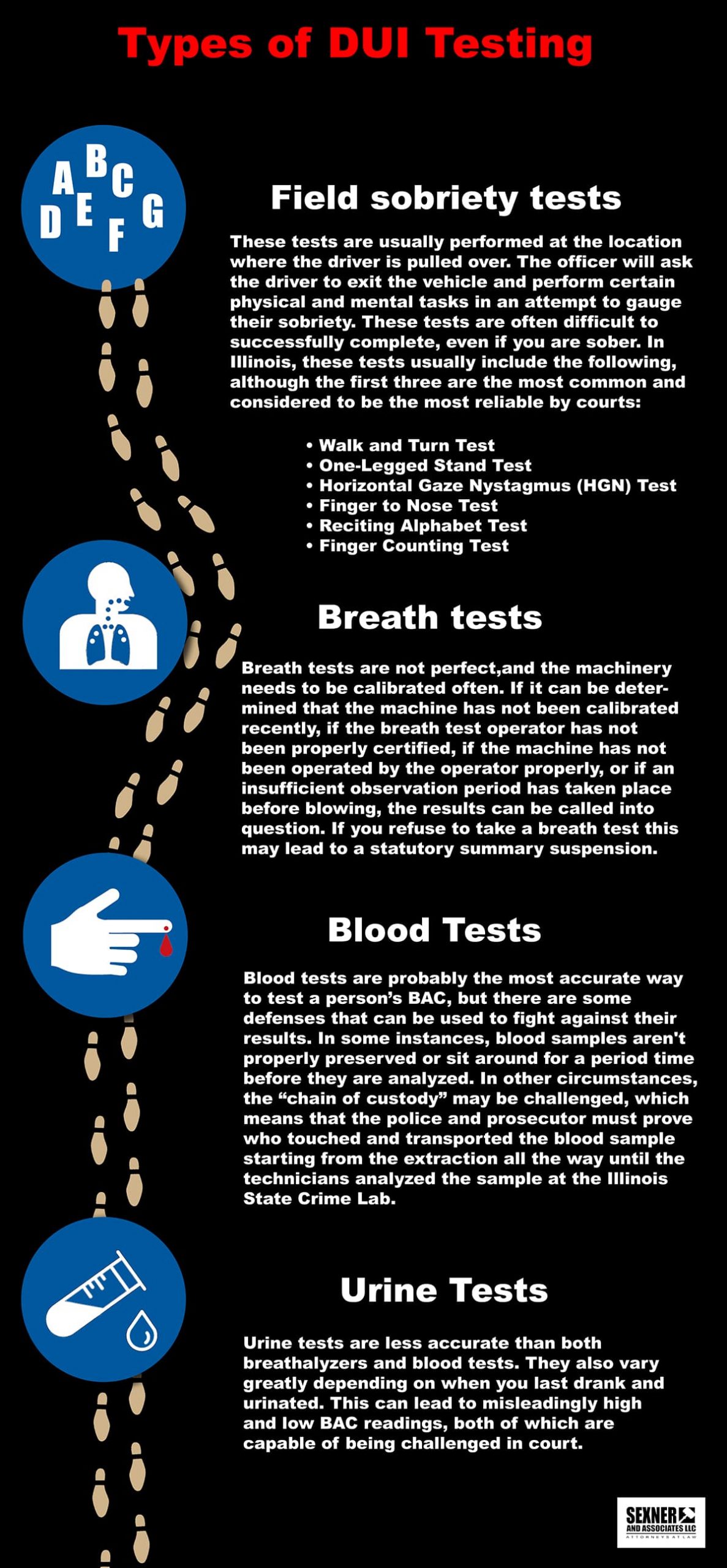
There are many different tests the police can use to help determine if you are legally intoxicated. These include field sobriety tests, breath tests, a urine test, and a blood test. All of these have different rates of accuracy and each can be challenged in court.
Field sobriety tests – These tests are usually performed at the location where the driver is pulled over. The officer will ask the driver to exit the vehicle and perform certain physical and mental tasks in an attempt to gauge their sobriety. These tests are often difficult to successfully complete, even if you are sober. In Illinois, these tests usually include the following, although the first three are the most common and some are considered to be more reliable than others by the courts:
- Walk and Turn Test
- One-Legged Stand Test
- Horizontal Gaze Nystagmus (HGN) Test
- Finger to Nose Test
- Reciting Alphabet Test
- Finger Counting Test
Breath tests – Breath tests are not perfect, and the machinery needs to be calibrated often. If it can be determined that the machine has not been calibrated recently, if the breath test operator has not been properly certified, if the machine has not been operated by the operator properly, or if an insufficient observation period has taken place before blowing, the results can be called into question. If you refuse to take a breath test this may lead to a statutory summary suspension.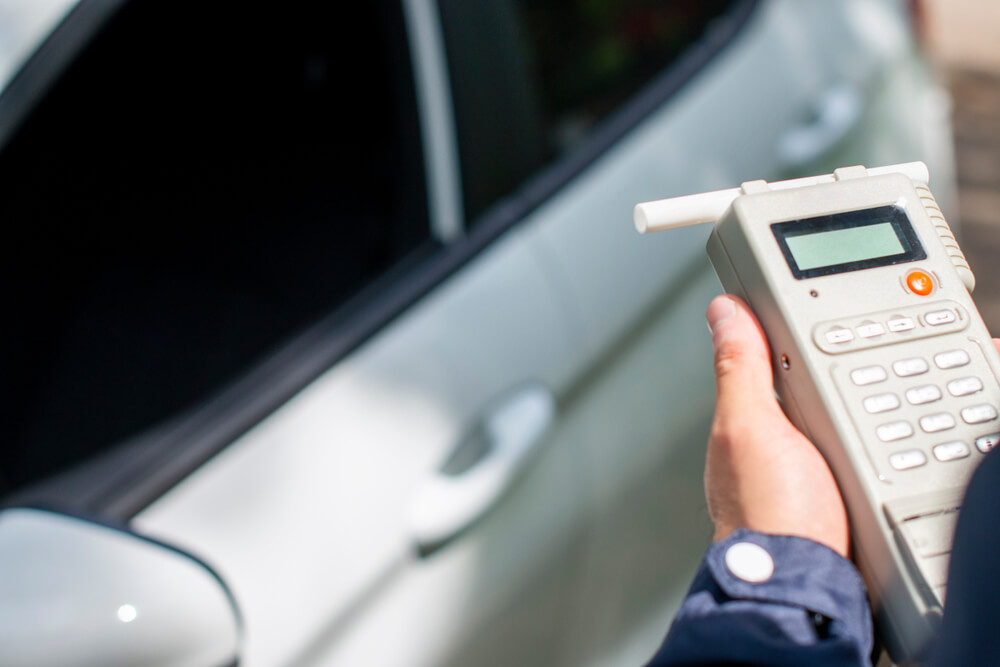
Blood Tests– Blood tests are probably the most accurate way to test a person's BAC, but there are some defenses that can be used to fight against their results. In some instances, blood samples aren't properly preserved or sit around for a period of time before they are analyzed. In other circumstances, the “chain of custody” may be challenged, which means that the police and prosecutor must prove who touched and transported the blood sample starting from the extraction all the way up until the technicians analyzed the sample at the Illinois State Crime Lab.
Urine Tests – Urine tests are less accurate than both breathalyzers and blood tests. They also vary greatly depending on when you last drank and urinated. This can lead to misleadingly high and low BAC readings, both of which are capable of being challenged in court.
A DUI attorney in Chicago from Mitchell S. Sexner & Associates LLC will be able to determine the best course of action for your case and whether the test results can be called into question.
Penalties for First-Time DUI vs. Multiple DUI Offenders
Typical First-Time DUI Penalties
As mentioned earlier, the penalties for a first-time DUI offender vary greatly from the penalties for those who have received multiple DUIs. Usually, an individual's first two DUIs are classified as misdemeanors, although depending on the circumstances, even a first offender can sometimes be charged with a felony. Penalties for a first-time offender may include, but are not limited to:
- Jail time for up to twelve months (although typically no jail time at all is involved for a first offense unless there is severe injury to another or some other unusual circumstance)
- Fines as high as $2,500 (although fines are not usually that high. Keep in mind that for most counties, there are two components to the money that will be due. There is the fine, which your attorney will negotiate to be as low as possible. But there are also court costs, which are non-negotiable fixed fees that the legislature has allowed the court to charge as well. These are added together for the total due. It's common for counties such as Cook County to give you as long as a year to pay these fees. Other counties often require payment in less time)
- Victim Impact Panel (VIP) is typically a one-time event where the defendant watches some speeches about how Driving Under the Influence has adversely affected people and their families.
- Community Service may be required, especially if the defendant blew over .16 on the Breath Machine
- Alcohol/Drug Classes and Counseling are required in Illinois for any defendant who wishes to receive Court Supervision on their case. Even for multiple offenders, alcohol/drug treatment is almost always a requirement of their sentence as well.
Potential Multiple DUI Offender Penalties
First-time offenders typically do not lose their right to drive as a result of a supervision sentence. If they become suspended due to a Statutory Summary Suspension based on whether or not they took chemical testing, they are usually still eligible to drive with the aid of a machine in their car during this period. But defendants who are charged with multiple DUIs are in danger of greater penalties and potential loss of driving privileges, which, depending on a number of circumstances, may include:
- Prison time of one to thirty years (in the case of six or more DUIs)
- Loss of driving privileges for an indeterminate period of time or for lifetime
- High fines as high as $25,000
- Additional penalties depending upon unique circumstances
Aggravating DUI Circumstances
There are also additional potential consequences depending upon the specific circumstances. The circumstances of each person's DUI arrest may vary, but certain actions will usually trigger greater penalties. These include, but are not limited to:
- Having a child in your vehicle - This can lead to additional fines and jail time for first-time and multiple DUI offenders.
- Leaving the scene of an accident - Continuing to drive, even as little as further up the street, can result in additional consequences. If the accident only involved property damage, the offense is a misdemeanor.
- Killing someone - It's considered reckless homicide when someone dies as a result of an individual's drunk or drugged driving. This is a felony and punishable by many years in prison.
- Injuring someone - It may be considered a DUI with injury if someone is seriously injured as a result of an individual's drunk driving and this offense may be upgraded to a felony (Aggravated DUI). This may result in higher fines and jail or prison time. If a person leaves the scene of an injury accident, the additional charge may be a felony as well. The more serious the injury, the more serious the penalties are typically.
- Being charged with a DUI as an out-of-state resident - While this won't necessarily increase your legal consequences in Illinois, it may lead to the loss of your license in your home state. Do not risk this and contact a local attorney immediately to help determine what consequences you may face in your home state.
- Being charged with a DUI while underage - If you are charged with drunk driving while under the legal drinking age (twenty-one), you are likely to face all the standard DUI penalties, in addition to being referred to various substance abuse and/or driving programs for minors.
It's a smart idea to contact a Chicago DUI attorney at Mitchell S. Sexner & Associates LLC regardless of whether any of these factors apply to you. You want experienced and aggressive attorneys on your side and that is exactly what you get with our law firm. Call us now at (312) 644-0444.
DUI Sentence Calculator
This unique DUI Sentence Calculator will help you estimate the penalties you may face when charged with a DUI in Illinois. It's important to note this is for informational purposes only and It's vital that you speak with a lawyer to get a more accurate determination of potential consequences. The team at Mitchell S. Sexner & Associates LLC can give your case a detailed and personalized free case review in order to help you understand any potential DUI penalties. View the Sentence Calculator above, then call us at (312) 644-0444 to get started.
DUI Supervision vs. DUI Probation – What's the Difference?
If you are sentenced for a DUI offense, supervision is what you want (only people who have not been previously sentenced for a DUI are eligible for a supervision). That's because a sentence of supervision doesn't take away any driving privileges as long as you obey the rules of the court and do what's been instructed. You may still suffer a suspension based upon a Statutory Summary Suspension (discussed below), but the sentence of supervision will not result in a loss of privileges when the Secretary of State learns of your sentence. That's very important.
Probation on the other hand, is very similar, but very different. It's also a period of time to stay out of trouble and to obey the court. But the big difference is that probation is a conviction and supervision is not. Even if you do everything the court asks, probation is still a conviction when your sentence is over. But if you do everything the court asks on a supervision, that sentence will never turn into a conviction.
What difference does that make? When the Secretary of State (SOS) learns of a probation (conviction), they will revoke your driver's license. A revocation is indeterminate in time and means that you'll completely lose your privilege to drive until such future time that the SOS feels you're worthy of regaining your privileges. The process to ask them for a return of privileges is called a “hearing”, but once your license has been revoked, you can't be certain how long it will take to convince the SOS. If you've been revoked, Mitchell S. Sexner & Associates LLC can help you petition to regain your license at a hearing.
Alcohol / Drug Evaluation and Required Counselling
Some states don't require alcohol / drug classes or counseling as part of a DUI sentence, but courts in Illinois generally do. Especially if you qualify for a sentence of supervision (which will help you avoid a revocation), the judge is going to require this.
What's a DUI Evaluation?
It involves going to a company licensed by the Illinois Department of Alcohol and Substance Abuse /DASA, (now known as the Division of Alcoholism and Substance Abuse of the Illinois Department of Human Services). to give evaluations and answer many questions related to how alcohol and/or drugs have influenced (or not influenced) your life. For most counties in Illinois, you can choose your provider, but in certain Northern Illinois Counties such as Cook County, DuPage County and Lake County, there is only one designated provider for you to go to.
Every provider charges something for this service (usually between $150 and $250) and will require that you provide them with copies of certain police paperwork and a fresh copy of your Court Purposes Driving Abstract (driving record). You'll then take part in an evaluation which is usually part oral questions and part written questions. When this is finished, they will rank you on a scale which will designate you somewhere on the scale of risk from a “social drinker” to “alcohol/drug dependent”.
How Might My Evaluation Ranking Influence my Case?
This ranking will play a large part in many things that occur during your DUI court proceedings. It may influence your chances of getting a special negotiated deal or reduced charge from the prosecutor. It may also impact to what extent the prosecutor and judge are concerned that you may be a danger to others. But in every case, your alcohol evaluation ranking will directly dictate what type and length of treatment will be required as part of your sentence. The Judge and prosecutor are simply not trained to evaluate whether you have a big problem or a small problem; that's why they rely on the evaluation to tell them what your situation is.
As part of your sentence requiring alcohol/drug treatment or counseling, the Judge will order you to complete whatever course of treatment is indicated by your ranking. The lower you're ranked, the cheaper and quicker your classes will be and the higher you're ranked, the more expensive and extensive. The legal team at Mitchell S. Sexner & Associates LLC can help you understand what factors influence the evaluators.
Even if you were required to use a particular evaluator, you will then have a choice as to where you would like to do your treatment. There are literally many hundreds of authorized treatment providers in Illinois and many are likely near to where you live. You'll be able to find one that works well for you and your schedule.
Gets ResultsContact Us Today! Schedule Consultation
Statutory Summary Suspension
When arrested for a DUI, it's normal to be concerned about your driving privileges. Will I be able to continue to drive? Will I be able to keep my job, support my family and still be able to go to the grocery store? At least for first-time offenders, the answer is almost always yes. For such defendants, a sentence of supervision is typical in Chicago and throughout all of Illinois and supervision doesn't take away any driving privileges. What affects your ability to drive is something that's related to your DUI, but different. It's called the Statutory Summary Suspension (SSS).
Different than the DUI offense itself (which is a criminal matter), the SSS comes along with almost everyone's DUI, but it's a civil matter that's handled in the same courtroom and by the same judge. It's basically a separate penalty for people who either refused the chemical testing or who took the chemical testing but registered over the “legal limit”. When granted a driver's license, drivers agree to not drive in an unsafe manner and to agree to undertake chemical testing if legitimately requested by a police officer. When this promise is broken, the law allows the Secretary of State to issue this type of suspension.
If you have not had a DUI or SSS in the last 5 years, you'll likely be considered a “first-time offender” for purposes of your SSS (be aware that “first-time offender” means something different for purposes of a DUI though). Penalties are typically as follows:
- 6 month suspension for first-time offenders who took the requested tests but disclosed over .08 for alcohol, over 5 nanograms of THC-9 for cannabis, or any amount of other drugs such as cocaine or heroin
- 12 month suspension for first-time offenders who refused to take the requested tests.
- 12 month suspension for non first-time offenders who took the requested tests but disclosed over .08 for alcohol, over 5 nanograms of THC-9 for cannabis, or any amount of other drugs such as cocaine or heroin
- 36 month suspension for non first-time offenders who refused to take the requested tests.
Other than non-first-time offenders who refused to take chemical testing and offenders under the age of 18, almost everyone else will be able to drive during this suspension period. That is, as long as they apply for a Monitoring Device Driving Permit (MDDP) through the Illinois Secretary of State and put a Breath Alcohol Ignition Interlock Device (BAIID) on their car.
The SSS period always begins 46 days after the date that you were issued your paperwork (except sometime in cases when blood or urine tests end up taking longer to disclose the presence of alcohol or drugs in your system, in which case it may take longer for the suspension to begin). Until that 46th day, as long as your license was good before, it remains in force. You'll find your “Receipt to Drive” on the back of the document titled “Notice of statutory summary suspension”. Carry this with you for at least until you receive your MDDP.
As long as the address that the Secretary of State (SOS) has for you on file is valid and you are eligible, you should receive an application for the MDDP about two or three weeks after your arrest. Fill it out and follow the instructions and if you do this promptly, you'll receive the Permit in the mail from the SOS in plenty of time to go have the BAIID device installed on your car. If your address is incorrect, this type of mail is usually not forwarded by the Post Office though and you'll need to ask your lawyer how to get this application. Here are some other important things to know:
- The period of your suspension is independent of your court dates on your DUI. If you're required to drive a work vehicle (such as a plumber who carries specialized tools in his/her truck), we can explain how you may be able to get permission to drive that vehicle without a BAIID installed in it.
- If you're caught driving a vehicle without a BAIID installed during your SSS, you're subject to arrest and a felony charge.
- If you blow over a certain % of alcohol into the BAIID machine, you may be subject to loss of BAIID privileges and an extension of your SSS.
- Modern machines require you to blow periodically while driving and take a photograph of who is blowing to prevent others from blowing into your machine when you drive. If you share a car, be aware that others who share your car will need to blow into the BAIID in order to start and drive the vehicle as well.
Your DUI legal team can always try to negotiate an agreement with the State's Attorney or prosecutor to rescind (which means to undo) your SSS as part of a plea deal. This sort of deal used to be much more common in Illinois than it is now, but depending on the circumstances, it is still possible to do in certain cases.
If the prosecutor refuses to rescind (as is common in many counties), then the only opportunity to rescind the SSS will be to file a Petition to Rescind Statutory Summary Suspension. This Petition involves alleging one of the following things:
- The police didn't have probable cause to pull you over or initiate an encounter
- The police didn't have probable cause to arrest you once they interacted with you on the scene
- The police didn't inform you about your specific rights regarding the SSS
- You didn't really refuse chemical testing
- You took the test(s), but the results were not correct
- You were denied “due process of law” because a Petition to Rescind was filed and you were not given your day in court to contest the suspension in a timely manner
If your SSS can be rescinded, you will not need to apply for a MDDP, install a BAIID, or pay the necessary reinstatement fee to the Secretary of State to later reinstate your driver's license. Your attorney can evaluate your case and tell you whether this is a realistic option in your particular case.
Special Considerations for CDL Drivers
People with a Commercial Driver's License (CDL) have additional concerns after being arrested for a DUI in Illinois. Although a CDL driver may be able to retain his regular driver's license, keeping the CDL component of his/her license is much more complicated and concerning, especially because the ability of a commercial driver to earn a living is directly tied to keeping the CDL valid.
Generally, a CDL driver's license will become disqualified (DQ'd) if either:
- He/she pleads or is found guilty of a DUI, or
- Even if he/she beats the DUI, suffers a Statutory Summary Suspension, or
- Blows over .04% on the breath machine, even though it is below what is considered the “legal limit” for regular drivers
The DUI attorneys at Mitchell S. Sexner & Associates LLC are well aware of CDL drivers' special considerations and will always do our best to avoid disqualification of our clients' CDL components.
Will I Need to Hire a Lawyer for a Chicago DUI?
If you have been charged with either a misdemeanor or a felony DUI, the course of your future will likely depend on the actions you take next. Few people live next-door to where they work or go to school. So, driving a car isn't just a luxury, it's a necessity for almost everyone. Of course, people are often able to get around with the assistance of an Uber, taxi or the help of a family or coworker, but this can be both difficult and expensive. So, it's important to do everything you can to try to keep your driving privileges intact.
It's very common for people to consider handling traffic matters themselves, without the aid of a traffic attorney. After all, everyone has heard of the high costs associated with being charged with Driving Under the Influence. Although it's true that court fines and alcohol treatment required by the court can sometimes be expensive, that's not always the case, and attorney fees are not usually as high (at least at Mitchell S. Sexner & Associates LLC) as people often believe they will be.
If you're considering handling your DUI without an attorney, you're not alone. But the real question is whether this is even possible. The short answer is that it is possible, but it is not usually practicable (meaning that it's typically a very bad idea). Technically, it's true that a defendant should be able to represent himself or herself in any type of traffic or criminal case they choose. Even in some cases of murder, there have been defendants who have insisted that they did not want a lawyer's assistance and demanded to represent themselves. Ultimately (and usually with apparent displeasure), a judge will begrudgingly agree to allow the accused to proceed pro se (which means by themself). But just because you may be able to eventually convince a Judge to allow you to proceed pro se doesn't mean that it's a good idea.
Why are Judges Hesitant to Allow Defendants to Represent Themselves for a DUI?
Judges know how important driving privileges are to people and they don't really want you to lose your driver's license except when charged with the most serious of cases. They also know that DUI law is often considered a legal specialty and many experienced criminal lawyers aren't even sufficiently knowledgeable to properly handle a DUI case. So, Judges are legitimately worried that if you're allowed to represent yourself, that your case may turn out poorly and you may end up losing your license or even going to jail, whereas if you had instead hired competent counsel, this might not have happened. In this way, Judges are looking out for your best interests when they tell you to go hire a lawyer. Think about this: Even lawyers get DUIs, but when that happens, you will almost never see a lawyer representing themselves in court. They know the stakes are too important, so they'll hire another lawyer to help them in their defense. That should tell you something.
Another reason why a traffic judge will generally tell you that you need to hire an attorney when faced with a DUI is because they're required to do that as Driving Under the Influence in Chicago and across Illinois is a jailable offense. A jailable offense doesn't mean that you'll actually go to jail for your DUI though as most people don't. But what it means is that some people will – usually defendants with serious traffic records or when injuries are involved.
If you don't have a bad record, what does this have to do with you then? Keep in mind that judges don't have your driving record in their court file. They have your tickets and other paperwork, but not your record (driving abstract). That's because judges are people too, and if they were able to look at your traffic or criminal history before sentencing, they might be inadvertently prejudiced against people with bad records. So, when you show up in court on a DUI without a lawyer, the Judge doesn't know if you've got a clean record or whether this is your 3rd DUI. He or she is just not allowed to know. As a result, to be safe, they need to tell you that a DUI is a serious offense, that it's possible that you might go to jail, and tell you to go hire a lawyer.
Lastly (and no Judge will ever tell you that this is another reason), but when a defendant represents himself, it often gives the Judge a headache and makes court proceedings take much longer than necessary. That's because defendants who represent themselves are unlikely to have the proper legal knowledge to effectively and expeditiously handle the case in court. That often adds up to judges who may become annoyed by having to explain and re-explain proper court procedures to pro se defendants or judges who may need to work a longer day than necessary. It should come as no surprise that having an upset judge is not a benefit to anyone's case
Contact Our DUI Defense Attorneys in Chicago
The best way to avoid a DUI conviction is, of course, to not drink and drive. That being said, there may come a time when you find yourself in police custody, wondering if you may have underestimated the amount you drank. When that happens, remain silent and call a Chicago DUI lawyer immediately.
The legal team at Mitchell S. Sexner & Associates LLC is made up of experienced advocates who know the best ways to protect you, your driving privileges, and your future. We will pursue the best course possible for you, which may result in reduced charges or even a complete dismissal of your traffic charges.
Former Assistant State's Attorney and founding member of Mitchell S. Sexner & Associates LLC, Mitchell S. Sexner urges anyone cited for DUI in Illinois to call his offices and talk to a member of his knowledgeable team, covering Chicago and most counties in Northwestern Illinois. Call (312) 644-0444 today for a free consultation. Your reputation, good name, and freedom may depend upon it.